· 15 min read
DevOps Maturity: Why Friday Releases Shouldn't Scare You
If deploying on a Friday makes you nervous, your pipeline is telling you something. A practical guide to DevOps maturity, from FTP uploads to continuous delivery.
Published: · 4 min read
Developers are either dismissing AI or panicking about it. Both reactions are wrong. The tools are here, they're getting better fast, and the job now is to pick them up.

LinkedIn has always been a mess. I enjoy it anyway. Over the years it’s given me work, clients, and people who became genuine business partners. The signal is in there somewhere, buried under the noise.
The noise has changed a lot recently though, and if you’re a developer watching your feed, you’ll have seen the same thing I have.
A few months ago it was offshore agencies racing to quote the lowest possible day rate. Cheapest was the pitch. It never works. Cheapest and best have never been the same thing, and clients eventually figure that out.
Then came the AI slop. The same post recycled fifteen different ways. Tips and tricks with code screenshots that are AI generated images, containing code that doesn’t work and never could. Nobody checks. Nobody cares. It just gets posted again next week with a different thumbnail.
Now we’re in the third phase, and it’s the most interesting one. Developers with years of experience posting things like “AI will never replace me, it can’t even work out I need my car at a car wash.” Software agencies publishing content claiming AI is only good for MVPs because it can’t build anything real.
This is wrong, and worth saying clearly.
If you write software, you can use AI to build faster. Significantly faster. Not because it does your job for you, but because it handles the parts that eat your time without requiring your actual expertise. Boilerplate. Repetitive logic. First drafts of things you’d otherwise write from scratch. You still need to know what you’re building, why it works, and when it’s gone wrong.
If you don’t know what good code looks like, AI will confidently hand you bad code.
That last part matters. It will hardcode secrets in your frontend. It will write something that looks right and isn’t. Non-developers hitting walls with AI coding tools isn’t a surprise, it’s expected. Knowing what to ask, and knowing when the answer is wrong, requires the knowledge they don’t have.
That’s not a failure of AI. It’s just how tools work. A table saw is useful if you know what you’re doing with it.
And the tools are moving fast. Things that weren’t possible twelve months ago are done in five minutes with the right prompt today. That pace isn’t slowing down. The next two or three years are going to look nothing like the last two or three. Is there a bubble? Probably, to some degree. But the technology itself isn’t going anywhere. Each model that ships is better than the last. The hype will settle, the money will find its level, and what’s left will be genuinely useful and more capable than what exists today.
Betting against continued progress at this point is a strange position to take.
Anthropic said recently that software engineering is done. Whether that’s true or not depends entirely on what you do next. If you ignore the tools available to you and keep posting about why AI can’t match your 10 years of experience, you might find that argument harder to make in two years.
The developers who are actually using these tools aren’t replacing themselves. They’re doing more. Writing things they wouldn’t have had time to build before. Moving between projects faster. Taking on more complexity without taking on more hours.
You don’t have to be precious about it. Pick up the tools. Learn where they’re useful and where they fall apart. Build something with them. That’s the job now.
· 15 min read
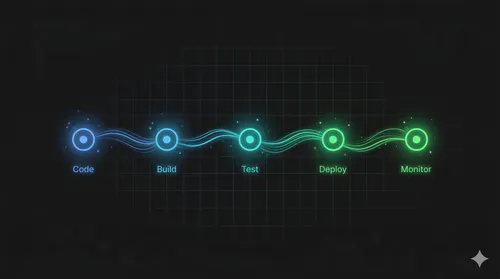
If deploying on a Friday makes you nervous, your pipeline is telling you something. A practical guide to DevOps maturity, from FTP uploads to continuous delivery.
· 3 min read
A MechWarrior gaming community I joined at 13 is the reason I became a software engineer. I recently reconnected with someone from that world, 26 years later.